‘Nothing about us without us’: Why youth voice matters in grant making
By Suranne, Phoebe, Ailís, Neylia and Fatima
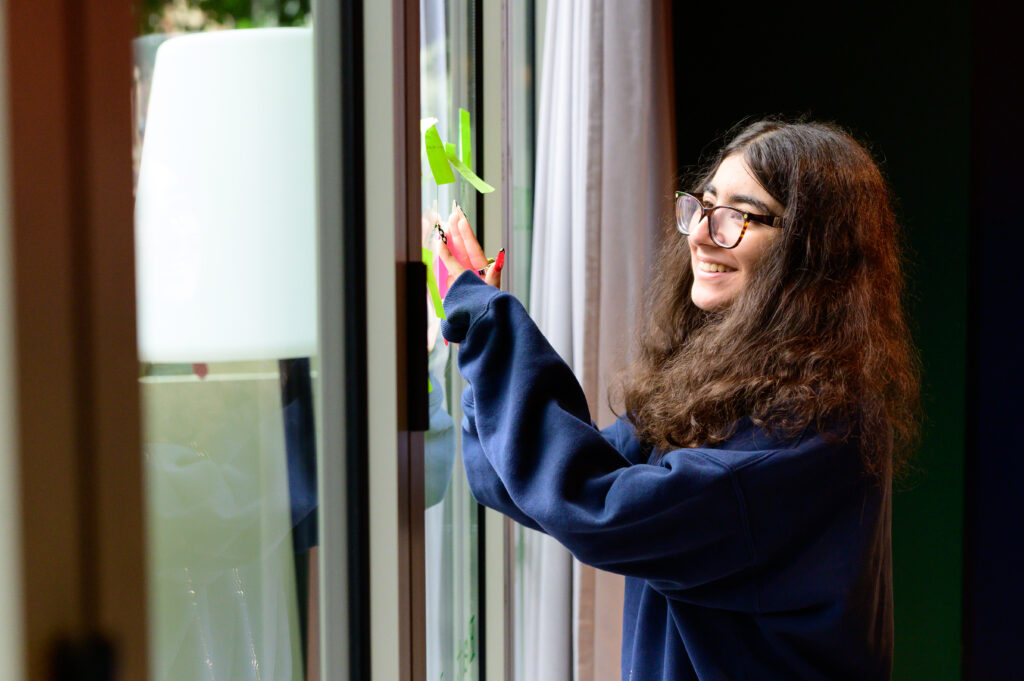
We are part of the Future Communities Collective, a group of young people who work alongside Co-op Foundation. As young people, we share our experience and expertise to advise on and shape the Foundation’s work.
Over the past year, we have been working on the second round of Future Communities Fund – which is supporting organisations who are helping young people with experience of the justice system to reconnect with their communities.
As the Future Communities Collective, we were involved in every aspect of the funding process. We co-designed the fund and its criteria, interviewed applicants, and made the final funding decisions. This week, it’s been exciting to announce the organisations we have decided to fund. You can learn more about Co-op Foundation’s new partners and their work here.
Below, we share what the experience of working on this fund was like for us, and why young people’s voices are an essential in grant making – not just a nice to have.
What was it like to co-design this fund?
Suranne: Jumping into the work as somebody with limited grant making experience, this journey has felt like a beautiful fusion between the mountain of expertise shared by the Co-op Foundation team with the diverse lived experiences of us as the young people that form the Future Communities Collective. The support given to us by the Co-op Foundation equipped us with both the training and the vocabulary we needed to make the key decisions that shaped the fund, particularly given that we were granted full decision-making power – where shortlisting outcomes were entirely our decision! Largely unheard of in the grant making space, this was authentic youth changemaking in action.
How did you ensure that lived experience informed this fund?
Phoebe: We ensured that lived experience informed this fund by working with Leaders Unlocked which allowed us to speak to multiple young people with experience of being in justice system. We also did a lot of pre-reading and exploration to inform our theory of development and ensure we were representing justice experienced young people. I was able to be a part of the working group who spoke directly to these young people, and it really shaped the way we developed the fund. The same young people reviewed applications and shared their opinion of which applicants should be funded.
What was it like being given decision making power on this fund?
Ailís: It was definitely a bit daunting at first! I’ve never been involved in grant making before, so I had lots to learn, but Co-op Foundation was incredible at organising sessions to help us learn more about the process and develop the skills needed to succeed. Being able to rely on the years of experience of the Foundation staff made me feel a lot more confident to trust the decisions I came to, particularly when it came to scoring applications and conducting interviews. By the time we got to the final decision-making retreat, it felt very natural to be making decisions ourselves as a collective. Having full decision-making power definitely improved my personal confidence in advocating.
What have been your biggest learnings from working on this fund?
Phoebe: Working on this fund has informed me of the systemic issues young people face within the justice system and when exiting the system. For example, struggling to find employment and readjust with often inconsistent parole care that struggles to meet individual needs. I have also learned on a more practical level, how important it is to embed lived experience and the voices of diverse young people into grant making. I have learned so much by working with the Co-op Foundation because I did not feel like an adviser, I felt like a member of
the team collaborating and co-designing this fund. That is perhaps my biggest
learning from the work, the importance of youth involvement with no tokensim.
Why is youth-led funding important?
Neylia: Youth‐led funding is important because it recognises that young people aren’t just part of the future – they’re living the issues and consequences from the older generation right now. Giving young people real decision‐making power means ideas come from lived experience, and not from adults who assume they know what’s best. It creates space for projects that feel relevant. It also builds confidence and long‐term leadership by trusting young people with actual responsibility, and not tokenistic roles. It also makes funding more equitable, because it brings in voices that are usually not considered in grant making. When young people shape the agenda, the work becomes more responsive, more imaginative and more honest about what communities actually need.
What would you say to other funders considering working in this way?
Fatima: Inspired by the words of disability rights activists, there is “nothing about us without us”. Systems and decisions are too often made for young people, but without directly involving them and sharing power. This means that they aren’t inclusive of young people’s needs – they miss the unique perspectives, lived-experience, and contemporary knowledge that young people bring to the table.
Working with young people will truly transform your work, bringing fresh perspectives you may never have considered before. And for people like myself that have been involved, it can be truly life-changing! Reflecting on our journey, it certainly hasn’t been perfect – but where there is a commitment to meaningful power sharing, relationships built on trust and respect for one another, and a genuine appetite for being open to change and challenge – it is so worthwhile.
Watch our video to learn more
Sign up to our blog to hear all the latest from the Future Communities Collective and how we work with Co-op Foundation.